
Appearance
Wood offers grain, color variation and a natural presence that weathers over time. Vinyl offers uniform color and repeated profiles for a cleaner, more consistent look.
Wood and vinyl can both create an attractive private yard, but they look, age, maintain and repair differently. The best choice is not the material that wins a generic checklist. It is the fence whose appearance and ownership experience fit your property, budget and expectations.
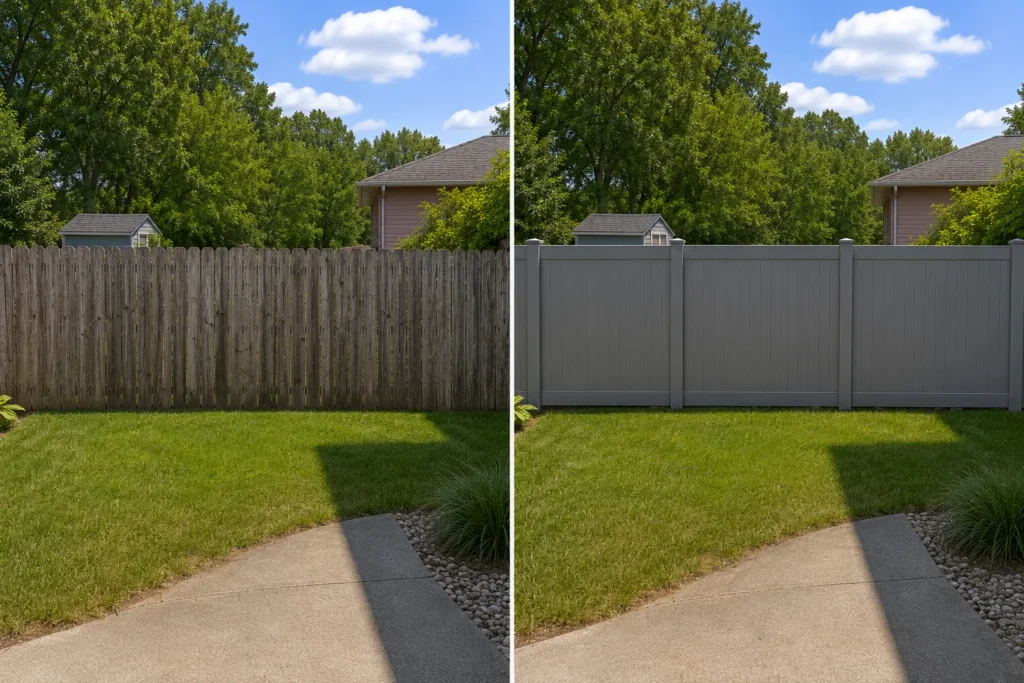
Wood is chosen for natural texture, warmth and design freedom. Board direction, spacing, trim, caps, transitions and custom gates can give the fence a strong relationship to the house and landscape. The tradeoff is that wood changes with exposure and usually asks more of the owner over time.
Vinyl is chosen for a clean, consistent manufactured finish and less routine surface care. Its posts, rails, panels and gates work as a coordinated system. The tradeoff is less field customization and a repair process that may depend on matching compatible components. Neither answer is automatically premium or practical; each serves a different owner.
Focus on the experience you will see and maintain every day.
Wood offers grain, color variation and a natural presence that weathers over time. Vinyl offers uniform color and repeated profiles for a cleaner, more consistent look.
Both can create full privacy and semi-private designs. Wood allows broad control over boards and details; vinyl uses available panel and component profiles.
Wood may need cleaning and future staining or sealing depending on the desired appearance. Vinyl does not need painting or staining but still benefits from periodic cleaning and inspection.
Individual wood boards and rails can often be repaired with conventional materials. Vinyl repairs may require compatible panels, rails, posts or hardware in the correct profile and color.
Wood naturally changes color and can check, move or weather with exposure. Vinyl keeps a more consistent finish but still relies on sound posts and correctly fitted components.
Wood handles custom heights, transitions, board arrangements and site-specific details especially well. Vinyl works best when the project fits the logic of the selected system.
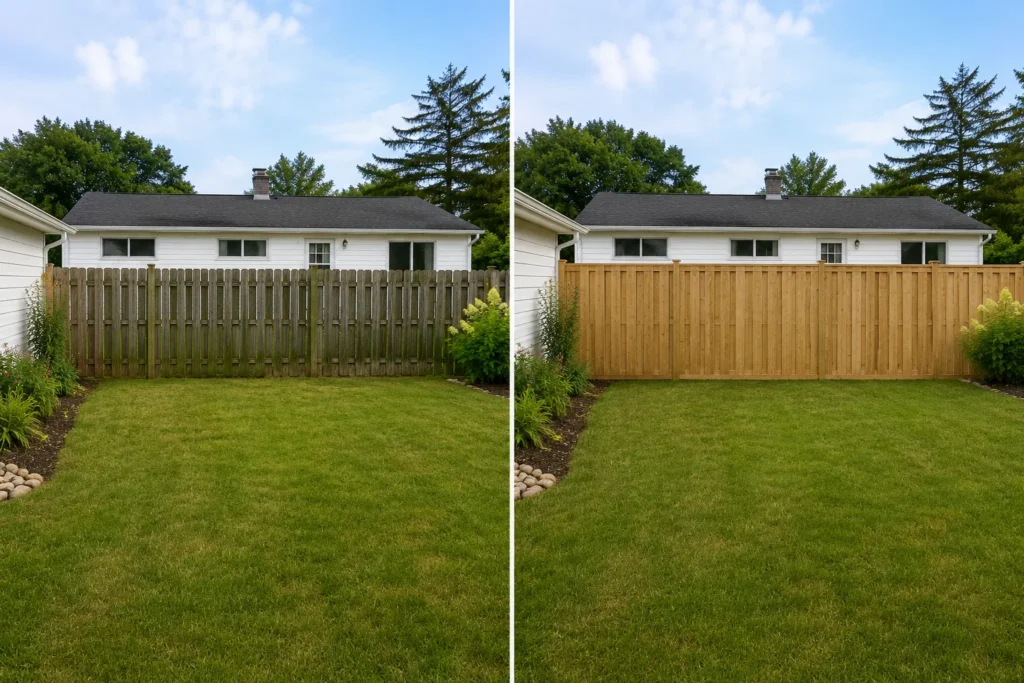
Wood is strongest when character and design flexibility are central to the buying decision.
The grain and variation of real wood can complement established landscaping, traditional homes and outdoor living spaces.
Horizontal boards, shadowbox patterns, picket details, caps, trim and tailored transitions allow the fence to respond to the property.
Cleaning, staining or sealing can be part of protecting the appearance you selected rather than an unexpected burden.
Localized board or rail damage can often be addressed without replacing a large manufactured section.
Wood can adapt gracefully around changing grade, existing improvements and mixed privacy needs.
A wood fence will not remain visually identical forever. Many owners view that natural change as part of its appeal.
You want repeated profiles, uniform color and a clean manufactured appearance across the yard.
You prefer periodic washing over planning future painting, staining or sealing.
The available panels, posts, gates and transitions provide the height, privacy and look you want without heavy customization.
Tell us the privacy goal, the look you prefer and how you feel about future upkeep. We can compare suitable wood and vinyl systems, gate needs and layout choices in a free property-specific estimate.
Iowa City Fence Builders brings 25 years of construction experience to fence installation, repair and replacement. We are Iowa contractor registered, fully insured and ready to provide references upon request.
You do not need a finished design to contact us. Bring the address and the result you want; we will help organize the material, layout, gates and project scope.
These answers provide a useful starting point. Your property, goals and selected fence system determine the final recommendation.
Wood often has a lower initial project cost than comparable vinyl privacy fencing, but style, height, lumber choice, vinyl system, gates and site conditions determine the actual estimate. Future maintenance should also be considered.
Both can provide long service when the system, installation and site conditions are appropriate. Wood changes and requires different care; vinyl avoids surface finishing but still depends on posts, components and repairable product availability.
Both wood and vinyl can provide full visual privacy. The effective result depends on height, openings, grade, gate placement and whether the layout blocks the actual sight lines.
Vinyl generally needs less routine surface maintenance because it does not require staining or painting. It still needs cleaning, gate adjustment and inspection for damage or movement.
Yes. Wood usually offers more freedom in board direction, spacing, trim, caps, custom transitions and field-built details. Vinyl choices are shaped by the selected component system.
Localized wood damage can often be repaired with conventional boards or rails. Vinyl repair may require matching compatible components, so product profile and availability matter.
No fence is maintenance-free. Vinyl avoids routine staining and painting, but it still benefits from washing, vegetation control, gate checks and prompt attention to impact or post movement.
Choose based on appearance, customization, future maintenance, repair expectations, budget and how the available system fits your property. A property-specific comparison makes the tradeoffs clearer.
Tell us what you want to change. We will help you choose the material, layout and scope that make sense.