
Property boundaries
Use reliable property information and a qualified surveyor when the line is uncertain. Replacing an old fence does not prove the old placement was correct.
Fence placement determines what the project encloses, screens and connects. Height determines how the fence feels and what it accomplishes. The right plan combines your goal with reliable property information, useful access, changing grade and the requirements that apply to the address.
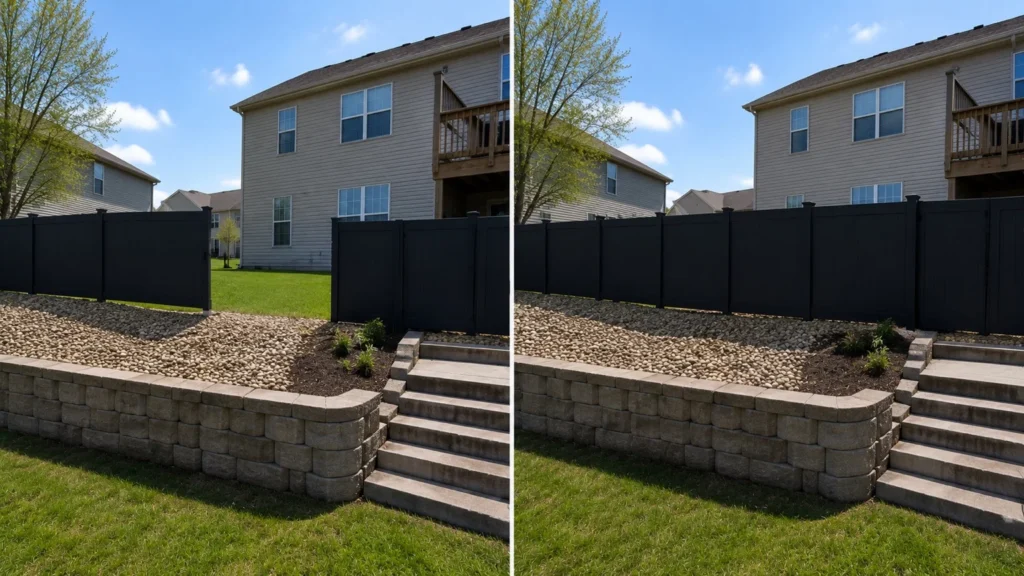
Start with use: the patio that needs privacy, the area the dog should access, the boundary that needs definition or the route people and equipment must travel. That creates a functional layout before details like corners and gate openings are finalized.
Then ground the layout in dependable information. An old fence, mowing line or neighbor’s recollection is not automatically the legal boundary. Easements, utilities, corner visibility, private covenants and municipal rules can also affect where a fence belongs. Resolving those issues early protects the investment and keeps the project moving.
A good line balances ownership information with the way the finished property needs to work.
Use reliable property information and a qualified surveyor when the line is uncertain. Replacing an old fence does not prove the old placement was correct.
Utility corridors, drainage areas and recorded easements can affect access and placement. Utility locating identifies marked facilities but is not a property survey.
Patios, decks, doors, driveways, equipment and gathering spaces influence where privacy begins and how people move through the enclosure.
A rising or falling yard changes the effective height, bottom clearance and visual top line. Retaining walls create additional transitions that deserve deliberate planning.
Mature roots, trunks, beds and future growth can make a technically straight line a poor long-term fit. Decide what should be protected and accessible.
Privacy should be evaluated from the places you use, while front corners and drive approaches may need openness for comfortable visibility.
The tallest available fence is not automatically the most private, attractive or appropriate answer.
Evaluate neighboring windows, decks, elevation and seating areas. A strategic section or transition may solve the view without surrounding the full property at one height.
Height must work with jumping behavior, climbable objects, visibility, bottom gaps and gates. The complete enclosure matters more than one measurement.
Pool barriers must be planned around current requirements, openings, gate operation and every connection to a structure or adjoining fence.
Lower wood picket or ornamental aluminum fencing can define space and support curb appeal without creating a heavy visual wall.
Height should match screening, security and operational needs while protecting vehicle visibility, service access and emergency movement.
Transitions can provide privacy where needed and openness where it improves landscaping, views or the relationship to the street.
The existing line can inform the conversation, but it should not replace reliable boundary information when placement is uncertain.
Gate location and width determine daily movement. Build them around people, mowers, bins, trailers and service access from the beginning.
Walk the proposed line from the yard, house, street and neighboring-facing side to understand privacy, proportion and transitions.
Tell us what the fence should enclose, screen or connect and where access matters. We can help translate those priorities into material, height, gate and layout options for a free estimate.
Iowa City Fence Builders brings 25 years of construction experience to fence installation, repair and replacement. We are Iowa contractor registered, fully insured and ready to provide references upon request.
You do not need a finished design to contact us. Bring the address and the result you want; we will help organize the material, layout, gates and project scope.
These answers provide a useful starting point. Your property, goals and selected fence system determine the final recommendation.
Placement depends on reliable boundary information and the current requirements that apply to the address. Confirm uncertain lines and current municipal, easement and private-association restrictions before construction.
An old fence is not automatic proof of the legal boundary. Use reliable records or a qualified surveyor when the line is uncertain.
Choose height after evaluating neighboring windows, decks, elevation and the places you want to protect. The effective sight line matters more than selecting a standard height blindly.
No. Utility locating marks covered facilities in the project area; it does not establish ownership boundaries.
Yes. The selected fence system can step or follow grade depending on material, style and the desired top and bottom lines.
Place gates along natural travel routes and size them for the people, mowers, trash bins, trailers or service equipment that must use them.
Yes. A thoughtful transition can create privacy near gathering areas while preserving openness, landscaping and curb appeal elsewhere.
Not necessarily. You can begin with the address and intended area. If placement depends on an uncertain boundary, reliable verification should occur before the final line is committed.
Tell us what you want to change. We will help you choose the material, layout and scope that make sense.