
Post movement
Sight down the line for leaning or rotation and check posts supporting gates first. Early movement can spread stress into panels, rails and hardware.
Fence maintenance starts with noticing small changes before they spread. A seasonal walk can reveal post movement, trapped moisture, rubbing gates, loose hardware, impact damage and vegetation pressure while the problem is still localized.
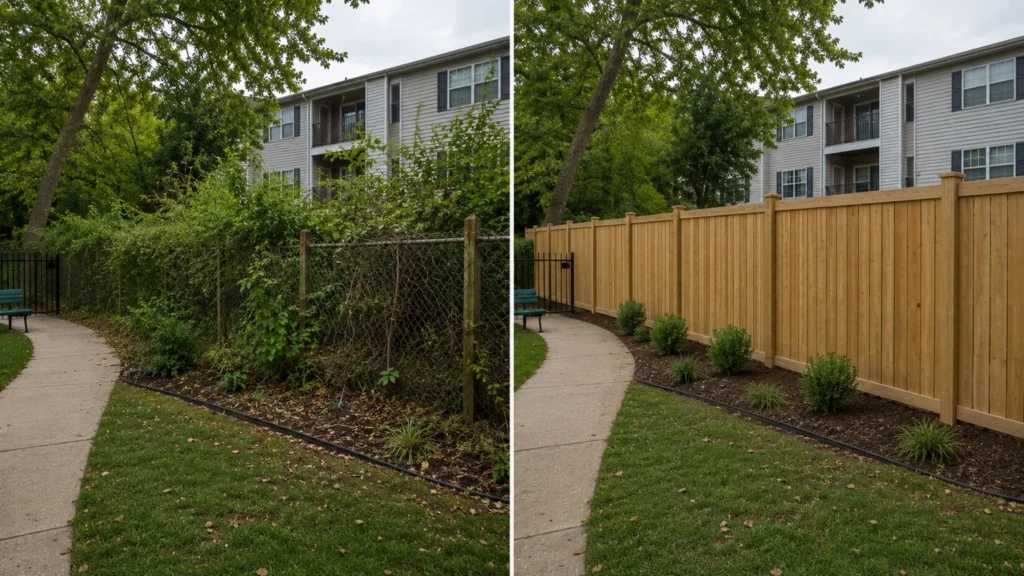
Walk both sides of the fence after winter, major storms and periods of heavy growth. Operate every gate, look along the top line, inspect where the fence meets the ground and pay attention to changes since the previous season. Photos from the same viewpoints make slow movement easier to recognize.
Different materials age differently. Wood needs attention to moisture, surface condition and components. Vinyl relies on clean coordinated parts and stable posts. Chain link depends on tension, rails, fittings and terminal points. Aluminum benefits from stable posts, sound panels, coatings and reliable gates.
The same fundamentals—movement, moisture, impact, vegetation and access—show up in different forms.
Sight down the line for leaning or rotation and check posts supporting gates first. Early movement can spread stress into panels, rails and hardware.
Open and close every gate. Watch for dragging, sagging, loose hinges, changing clearance and latches that no longer align comfortably.
Remove trapped mulch, soil and aggressive growth where it holds moisture or changes clearance. Watch erosion and low spots beneath containment fences.
Inspect after falling limbs, wind events, vehicle contact or heavy snow. Damage beyond the obvious point may include posts, rails and adjoining sections.
Vines, shrubs and tree growth can trap moisture, hide damage and push components out of alignment. Maintain useful inspection access.
Fasteners, caps, fittings, rails, boards, pickets and tensioned elements should remain connected and serving their intended role.
Use the system you own to decide what deserves closer attention.
Look for decay, splitting, loose boards, failed rails, post movement and finish condition. Clean and refinish suitable wood based on actual surface condition.
Wash as needed and inspect posts, rails, panels, caps and gates for movement, impact or components that have shifted from their system fit.
Check fabric tension, top rail, terminal posts, ties, fittings, bottom clearance and gate hardware after storms and impacts.
Inspect posts, panel connections, pickets, coating damage and gate alignment. Avoid allowing landscaping or stored items to push against the system.
Peeling, gray exposure, mildew-like growth and uneven absorption signal that preparation—not another quick coat—should lead the finishing plan.
Watch transitions between old and new material because changes in stiffness, movement and remaining life can make these points reveal problems first.
Post movement can transfer load into adjacent panels and gates. Early evaluation may preserve more of the surrounding fence.
Dragging or failed latching may signal hardware, frame, clearance or supporting-post problems that adjustment alone will not solve.
When deterioration or movement appears in several nearby areas, compare targeted repair, partial replacement and full replacement before spending repeatedly.
Send the address and photos of the concern plus surrounding sections. We can help determine whether repair, gate work, replacement or wood-fence staining and sealing is the right next step.
Iowa City Fence Builders brings 25 years of construction experience to fence installation, repair and replacement. We are Iowa contractor registered, fully insured and ready to provide references upon request.
You do not need a finished design to contact us. Bring the address and the result you want; we will help organize the material, layout, gates and project scope.
These answers provide a useful starting point. Your property, goals and selected fence system determine the final recommendation.
Walk the fence at least seasonally and after major storms, impacts or heavy growth. Regular observation makes slow changes easier to identify.
Control vegetation and ground contact, watch for movement or decay, repair damaged components and clean or refinish suitable wood according to its actual surface condition.
Yes. Vinyl avoids routine painting or staining but still benefits from washing, vegetation control, post and panel inspection, and prompt gate or impact repairs.
Inspect fabric tension, rails, posts, ties, fittings, bottom clearance and gates. Address impact or movement before it spreads through adjoining components.
Possible causes include frame movement, hinge wear, post movement, weight, changing ground clearance or an opening not built for its size and use.
Avoid conditions that trap moisture or keep vulnerable wood in persistent contact with soil, mulch or dense growth. Maintain visibility and airflow where practical.
Timing depends on whether the wood is new, weathered or previously coated, plus moisture, preparation, product directions and suitable weather. Surface condition should lead the plan.
Call for evaluation when posts move, gates stop working, components fail or deterioration appears across multiple sections. The pattern determines whether maintenance alone is enough.
Tell us what you want to change. We will help you choose the material, layout and scope that make sense.