
Jumping and climbing
Consider the dog’s demonstrated ability, nearby furniture or structures that become launch points, and whether an open design offers climbable features.
The best dog fence is not chosen from a breed chart. It is chosen around the behavior most likely to defeat the enclosure, the views that trigger your dog, the changing grade beneath the fence and the gate habits of everyone in the household.
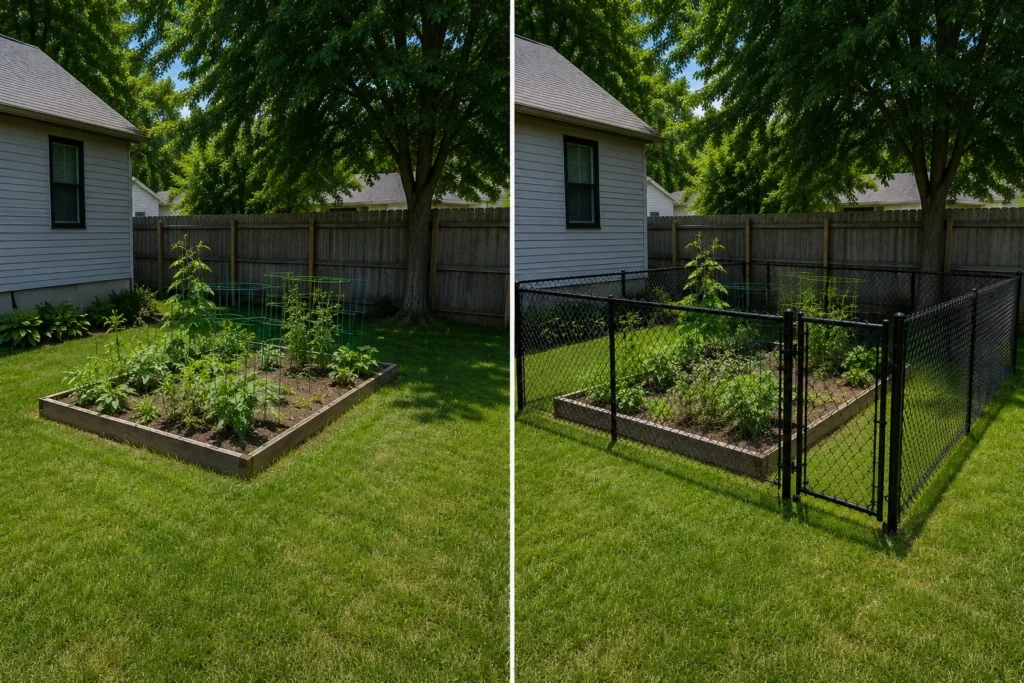
Some dogs jump. Others dig, squeeze through openings, climb from nearby objects or react strongly when they can see people and animals beyond the yard. A fence that addresses the wrong behavior can be tall, attractive and still fail the real containment goal.
Start by observing what happens at the current boundary. Note where the dog patrols, what creates excitement, whether low spots exist and how family members enter the yard. That information helps narrow material, height, openness and gate choices while preserving a yard people still enjoy.
Height is important, but it is only one part of the complete enclosure.
Consider the dog’s demonstrated ability, nearby furniture or structures that become launch points, and whether an open design offers climbable features.
Walk the full line for low spots, erosion, soft soil and changing grade. Small gaps can become the easiest escape route.
A solid privacy fence can reduce visual triggers for some dogs, while an open fence preserves views for calmer dogs and household supervision.
Picket spacing, chain-link mesh, gaps beneath gates and transitions must fit the smallest animal that uses the yard—not an average breed description.
Reliable latching, comfortable operation and placement away from chaotic arrival areas reduce the human errors that defeat otherwise strong fencing.
The enclosure should support children, visitors, lawn care, trash access and outdoor living so people are less tempted to prop gates or improvise access.
Each material can create useful containment when its openings, height and gates fit the animal and property.
Wood blocks views, offers customizable height and creates a private backyard. Future board condition and bottom gaps still require observation.
Vinyl provides a consistent solid barrier with fewer visual triggers and less routine surface finishing, using coordinated panels and gates.
Chain link provides practical visibility and enclosure at strong value. Coated systems soften the appearance, while mesh and climb behavior require consideration.
Aluminum preserves landscaping and sight lines with an ornamental appearance. Picket spacing and the dog’s response to outside activity matter.
Solid fencing can screen the most reactive boundary while open fencing defines less-exposed areas and preserves useful views.
A focused run or yard can create safe outdoor access without fencing every property edge, provided household access and supervision still work.
Check low points, gate clearance, retaining-wall transitions and places where landscaping changes the ground beneath the fence.
A gate that drags, feels heavy or sits in the wrong route is more likely to be left open or latched carelessly.
Move storage, furniture, wood piles and other launch points away from the enclosure when jumping or climbing is a concern.
Tell us the address, your dog’s size and behavior, current escape concerns, preferred visibility and required gate access. We can compare suitable fence systems in a free estimate.
Iowa City Fence Builders brings 25 years of construction experience to fence installation, repair and replacement. We are Iowa contractor registered, fully insured and ready to provide references upon request.
You do not need a finished design to contact us. Bring the address and the result you want; we will help organize the material, layout, gates and project scope.
These answers provide a useful starting point. Your property, goals and selected fence system determine the final recommendation.
The best material depends on jumping, digging, squeezing, climbing, visibility, reactivity, yard grade and gate routines. Wood, vinyl, chain link and aluminum can all work when matched to those conditions.
Height should reflect the dog’s demonstrated jumping ability, nearby launch points and the complete enclosure. A tall section does not solve gaps or weak gates elsewhere.
A solid wood or vinyl fence can reduce visual triggers for some dogs. Behavior, supervision and training remain important parts of responsible containment.
Chain link provides practical visibility and enclosure. Mesh size, height, bottom clearance and whether the dog climbs or reacts through the fence should be considered.
Picket spacing varies by system. Select openings appropriate for the smallest animal using the yard and inspect gates and transitions for larger gaps.
Plan around grade changes and low spots, then monitor erosion, digging and gate clearance. The appropriate solution depends on the material and property conditions.
Choose a natural household route with comfortable operation, reliable latching and enough width for lawn care or equipment without creating chaotic pet access.
No physical enclosure replaces supervision, training and responsible ownership. Good planning reduces likely weak points but cannot guarantee containment of every determined animal.
Tell us what you want to change. We will help you choose the material, layout and scope that make sense.