
Transparent Fence Finish
Preserve the most visible grain and natural wood character with lighter color influence and lower hiding power.
Bring faded, weathered or newly installed wood fencing to life with condition-based preparation and a finish chosen for the appearance and protection you want. Get a clear estimate for cleaning, preparation, stain or sealer—not a one-coat promise made before the fence is evaluated.
25 years of construction experience • Iowa contractor registered • Fully insured • References available upon request
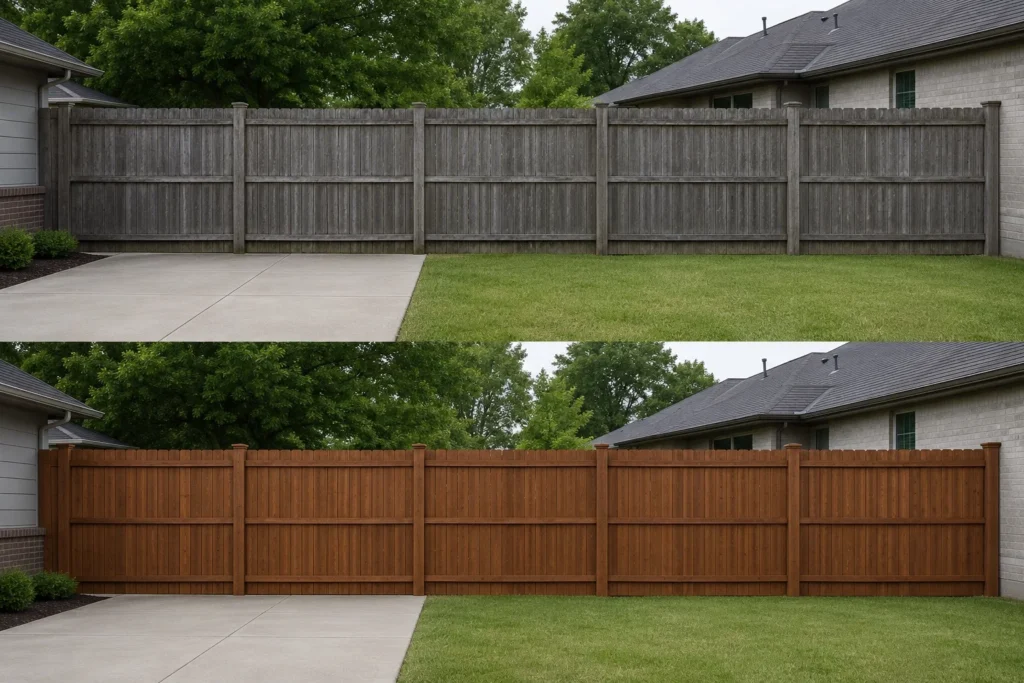
Wood fencing takes the full force of sun, rain, humidity, snow and freeze-thaw cycles from both sides. Without a suitable finish, rich new wood can fade gray, absorb moisture unevenly and develop a dry, neglected appearance that pulls down the entire yard.
Professional fence staining and sealing can restore color, improve water resistance and make a weathered enclosure feel like part of the property again. The result depends on more than the product name. New wood, gray wood and a fence with an old coating each require a different starting decision.
We evaluate the wood, existing finish, repairs, moisture and exposure before recommending the service. That keeps the estimate tied to the fence you own and the finish you want—from a natural transparent look to stronger semi-transparent color or a more opaque appearance.
Iowa City Fence Builders serves homeowners who want the fence protected without spending their weekend cleaning, masking, moving around landscaping and chasing a narrow weather window. You receive a defined service and a finished result designed around the condition of the wood.
Ready to improve your property? Request your free fence estimate.
Bring warmth and intentional color back to gray or uneven wood fencing.
Use a suitable exterior finish to help the wood resist repeated wetting and drying.
Add pigment and protection suited to the exposure instead of leaving bare wood unprotected.
Turn a dull perimeter into a cleaner backdrop for landscaping, patios and outdoor living.
Finish suitable new wood before years of exposure erase its fresh appearance.
Address loose, damaged or deteriorated components before coating hides the warning signs.
A strong finish begins by identifying the surface—not choosing a color from a screen and applying it over whatever is there.
New lumber may need time to dry and stabilize. Readiness is based on the wood and product requirements, not a universal waiting period.
Surface weathering, dirt and dead fibers can interfere with color and adhesion until the fence is properly cleaned and prepared.
The remaining coating, its condition and the desired new finish determine whether cleaning, stripping or a compatible maintenance approach makes sense.
Loose coating must be addressed before another finish is expected to perform; coating over failure does not repair the bond beneath it.
Growth and trapped moisture need condition-appropriate cleaning before the fence is treated as ready for finish.
New replacement boards and older weathered wood may absorb color differently, so expectations and finish choice should account for variation.
Fence staining fails early when finish is applied over dirt, loose coating, wet wood or deteriorated fibers. We match the preparation to the surface condition so the selected product reaches wood that is ready to accept it. That may involve cleaning, removal of loose finish, targeted sanding or additional restoration steps depending on what the inspection reveals.
Coverage matters on a fence because both faces, edges, rails, pickets and hard-to-reach transitions receive different exposure. Your estimate defines the surfaces included so “stain the fence” does not leave uncertainty about sides, gates or connected sections.
Color is also affected by the starting surface. Transparent and semi-transparent finishes allow wood tone and variation to show through; more opaque finishes provide greater hiding power. We help set a realistic expectation before the final color is approved.
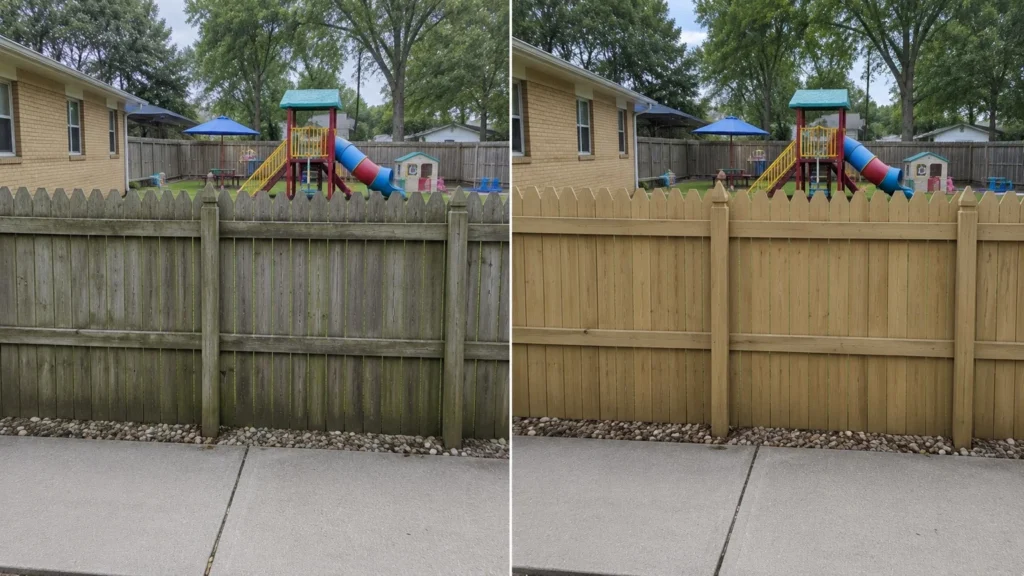
Send the Iowa City-area address, photos of both sides of the fence and any known coating history. Tell us whether you want natural wood, richer color or stronger hiding power. We will identify the likely preparation and finish path, then provide a clear estimate.
Request My Free Estimate“Stain” and “sealer” are often used interchangeably, but the finish experience changes with pigment and opacity. Clearer products preserve more natural wood appearance while offering less help against color-changing sunlight. Pigmented stains add color and generally provide stronger UV defense.
The best choice balances the look you want today with the condition of the fence and the maintenance cycle you are willing to own. We help narrow the category before color becomes the only decision.
Best when visible grain and natural variation matter most and the wood is suitable for a lighter-touch appearance.
Best when you want stronger color and UV protection while keeping recognizable wood texture.
Best when greater hiding power and a more uniform painted-stain appearance fit the existing surface.
Fence staining cost is shaped by the surface area and the work required before finish—not footage alone. Two fences with the same length can need very different preparation.
Total surface area includes the height, length, picket style, rails, gates and the number of faces being finished.
Clean bare wood differs from gray fibers, organic growth, peeling coating or uneven previous stain.
Cleaning, coating removal, sanding and restoration needs can change the labor more than the final application.
Product category, pigment, color change and number of appropriate coats affect material and labor.
Tight landscaping, adjacent structures, hardscape and delicate property features affect setup and application.
Failed boards, loose components and replacement lumber should be resolved before the finish is applied.
Send the address, current photos, approximate age and any known stain or sealer history.
Match preparation, opacity and color direction to the wood and the appearance you want.
See the included surfaces, preparation and finish system before work begins.
Enjoy a cleaner, richer-looking fence that complements the yard and is easier to maintain proactively.
Iowa City Fence Builders brings 25 years of construction experience to every fence project. We are Iowa contractor registered, fully insured and ready to provide references upon request.
Registration, insurance documentation and requested references are available before work begins, giving you solid information behind the company you hire.
Get clear answers, compare your options and take the next step toward the fence you want.
The right choice depends on the appearance and protection you want. Clearer sealers preserve a natural look but offer less pigment against UV exposure, while stains add color and can provide stronger defense against sun-driven fading.
Cost depends on fence size, height, included faces, surface condition, previous coating, preparation, access, repairs and finish selection. A condition-based estimate is more accurate than a universal price per foot.
Often, yes. Weathered fibers, dirt and organic growth need suitable cleaning and preparation so the finish is not applied over a weak surface.
Yes, when the remaining coating and desired new finish support a compatible preparation plan. Peeling or failing coating may require more than routine cleaning.
There is no reliable universal wait time. Lumber condition, weather, moisture and the selected product requirements determine when the wood is ready.
Most exposed fences benefit from condition-appropriate cleaning because dirt, growth, gray fibers and loose coating can interfere with appearance and adhesion.
More opaque finishes provide greater hiding power, but new and weathered wood can still differ. We explain likely variation before the finish is selected.
The included faces and surfaces are defined in the estimate. Access, ownership and neighboring conditions can affect what can be completed.
No. Stain and sealer do not reverse decay or repair failed wood. Damaged boards, rails and posts should be addressed before finishing.
Maintenance timing varies with sun, moisture, product, color, preparation and exposure. Inspect the fence regularly and renew the finish before broad failure develops.
Yes. Gates, lattice, caps and connected wood details can be included when they are identified in the estimate.
Color availability depends on the selected finish system. Transparent colors show more wood variation, while semi-transparent and solid stains create progressively stronger color influence.
Send the address, clear photos of both sides, approximate fence age, known coating history and the appearance you want—natural, richer color or more uniform coverage.
Request a free Iowa City fence-staining and sealing estimate based on the wood, preparation and finish you actually need.